Adapts to Your Research
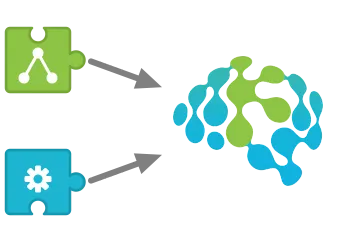
Any analysis method, research tool or service can be containerized and added to the platform as an extension. Kaapana adapts to your research question rather than the other way around.
An open-source toolkit for building medical imaging platforms.
Curate, process and analyze medical images at scale; on your own infrastructure, across institutions, without patient data ever leaving the site.
Kaapanafrom the Hawaiian word kaʻāpana, meaning "distributor" or "part"is an open-source toolkit for building state-of-the-art platforms in the field of medical data analysis, with a focus on radiological and radiotherapeutic imaging.
It's a collection of specialized tools and services, not a fixed application. It enables the creation of platforms tailored to specific use cases: large-scale medical image analysis, collaborative research, multi-center studies and more. It runs on your own hardware or in the cloud, from a single virtual machine to a full Kubernetes cluster.
Any analysis method, research tool or service can be containerized and added to the platform as an extension. Kaapana adapts to your research question rather than the other way around.
Following established standards and adopting widely used open technologies, Kaapana is highly compatible with existing clinical IT infrastructure (PACS, object stores, etc.) while being secure, modular and easy to extend.
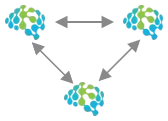
From federated analysis where data never leaves the site to multi-center studies on pooled cohorts – project-based data governance keeps every study, team and dataset cleanly separated on one platform.
From ingestion and curation to processing, analysis and review – Kaapana brings the core capabilities for medical imaging research together in one platform, so you can focus on your scientific work rather than assembling and maintaining the underlying infrastructure. And where the built-in tools end, Kaapana is built to be extended.
Filter, tag and visualize DICOM data by metadata in the datasets view to build study cohorts. Backed by an integrated PACS, metadata index and object store.
Run state-of-the-art methods like TotalSegmentator and nnU-Net on whole datasets with a few clicks, or train and fine-tune your own models on local data.
Convert whole-slide images to DICOM, review them in the SLIM Viewer or OHIF, and browse large pathology datasets with automatically generated thumbnails.
Install algorithms, workflows and applications as extensions with one click, and share your own methods with other Kaapana instances.
Train models and run analyses across sites without moving patient data – only models and aggregated results leave the institution.
Analyze results in integrated JupyterLab and RStudio environments and work on collaborative spreadsheets and reports with Collabora, without data leaving the platform.
Work with full desktop applications like MITK Workbench or 3D Slicer right in the browser, next to your data, or bring any desktop app you need.
A quick look at the platform – each clip shows a different functionality in Kaapana.
Explore, filter and tag DICOM data by metadata in the datasets view. Carve out study cohorts interactively instead of writing queries.
Trigger processing on whole datasets with a few clicks, from segmentation to radiomics. Workflows run reproducibly in the background and deliver results back to the platform.
Install new algorithms, workflows and applications with one click from the extension marketplace, and package your own methods so other sites can do the same.
Run many studies and teams on one platform. Data, workflows and access are cleanly isolated per project, every user only sees what belongs to their study.
Open full desktop applications like MITK Workbench or 3D Slicer directly in the browser. Access data where it resides on the platform.
From bare server to running platform in three steps.
A single Ubuntu or AlmaLinux machine with 8+ cores, 64 GB RAM and 200 GB storage is enough to start.
One script sets up Kubernetes and deploys the platform. Use our prebuilt containers or build them yourself from source.
Open the web interface in your browser, send DICOM data to the platform, install extensions from the marketplace and run your first workflow.
Kaapana relies on widely adopted technologies, making it stable and easy to integrate into existing infrastructures.
Every Kaapana platform runs on a Kubernetes cluster. All services and extensions are deployed, scaled and monitored there, from a single workstation up to multi-node data-center installations.
kubernetes.io ↗

Kaapana indexes the metadata of every DICOM image in OpenSearch. This powers the gallery-style dataset browser with full-text search, filtering and cohort building across the whole archive.
opensearch.org ↗
Airflow is Kaapana’s workflow engine. Processing pipelines are defined as DAGs that orchestrate containerized steps, from anonymization and segmentation to model training and federated analysis.
airflow.apache.org ↗
The dcm4chee archive is Kaapana’s internal PACS. Incoming DICOM data is received and stored there, then indexed and made available to workflows and viewers on the platform.
dcm4che.org ↗
Kaapana integrates the OHIF viewer to display DICOM images and AI results such as segmentations directly in the browser – no local viewer installation needed.
ohif.org ↗
Keycloak provides single sign-on for the entire platform. Users, roles and project-based access to all components are managed in one place and can be connected to institutional identity providers.
keycloak.org ↗
Every Kaapana component and processing algorithm is packaged as a container image, so the same workflow runs reproducibly on any site – a key building block for multi-center studies.
docker.com ↗Platforms built with Kaapana power medical image analysis in a wide range of projects – a selection:

Wissenschaftliche Datenbank – imaging research database at DKFZ

Image Data and Analysis Infrastructure for NCT

Supports the pathology data management infrastructure of oneNCT
We are a team of researchers, students and software developers working at the Division of Medical Image Computing at the German Cancer Research Center. Reach out and get to know us!























A collection of publications related to Kaapana:
If you want to reference Kaapana, please cite this publication.
Akünal Ü, Bujotzek M, Denner S, Hamm B, Kades K, Schader P, Scherer J, Nolden M, Neher P, Floca R, & Maier-Hein K. (2025). Kaapana: A Comprehensive Open-Source Platform for Integrating AI in Medical Imaging Research Environments.
DOI: 10.48550/arXiv.2512.09644Scherer, J., Nolden, M., Kleesiek, J., Metzger, J., Kades, K., Schneider, V., Bach, M., Sedlaczek, O., Bucher, A. M., Vogl, T. J., Grünwald, F., Kühn, J.-P., Hoffmann, R.-T., Kotzerke, J., Bethge, O., Schimmöller, L., Antoch, G., Müller, H.-W., Daul, A., … Maier-Hein, K. (2020). Joint Imaging Platform for Federated Clinical Data Analytics. In JCO Clinical Cancer Informatics (Issue 4, pp. 1027–1038). American Society of Clinical Oncology (ASCO).
Kades, K., Scherer, J., Scholtyssek, J., Penzkofer, T., Nolden, M., & Maier-Hein, K. (2022). Efficient DICOM Image Tagging and Cohort Curation Within Kaapana. In Informatik aktuell (pp. 279–284). Springer Fachmedien Wiesbaden.
Bujotzek MR, Akünal Ü, Denner S, Neher P, Zenk M, Frodl E, Jaiswal A, Kim M, Krekiehn NR, Nickel M, Ruppel R, Both M, Döllinger F, Opitz M, Persigehl T, Kleesiek J, Penzkofer T, Maier-Hein K, Bucher A, Braren R. Real-world federated learning in radiology: hurdles to overcome and benefits to gain. J Am Med Inform Assoc. 2025 Jan 1;32(1):193-205.
Fischer, M., Schader, P., Braren, R., Götz, M., Muckenhuber, A., Weichert, W., Schüffler, P., Kleesiek, J., Scherer, J., Kades, K., Maier-Hein, K., & Nolden, M. (2022). DICOM Whole Slide Imaging for Computational Pathology Research in Kaapana and the Joint Imaging Platform. In Informatik aktuell (pp. 273–278). Springer Fachmedien Wiesbaden.
Kades, K., Scherer, J., Zenk, M., Kempf, M., Maier-Hein, K. (2022). Towards Real-World Federated Learning in Medical Image Analysis Using Kaapana. In: , et al. Distributed, Collaborative, and Federated Learning, and Affordable AI and Healthcare for Resource Diverse Global Health. DeCaF FAIR 2022 2022. Lecture Notes in Computer Science, vol 13573. Springer, Cham.
Questions, ideas or feedback? Reach the Kaapana team through any of these channels.